
Make the message personal.
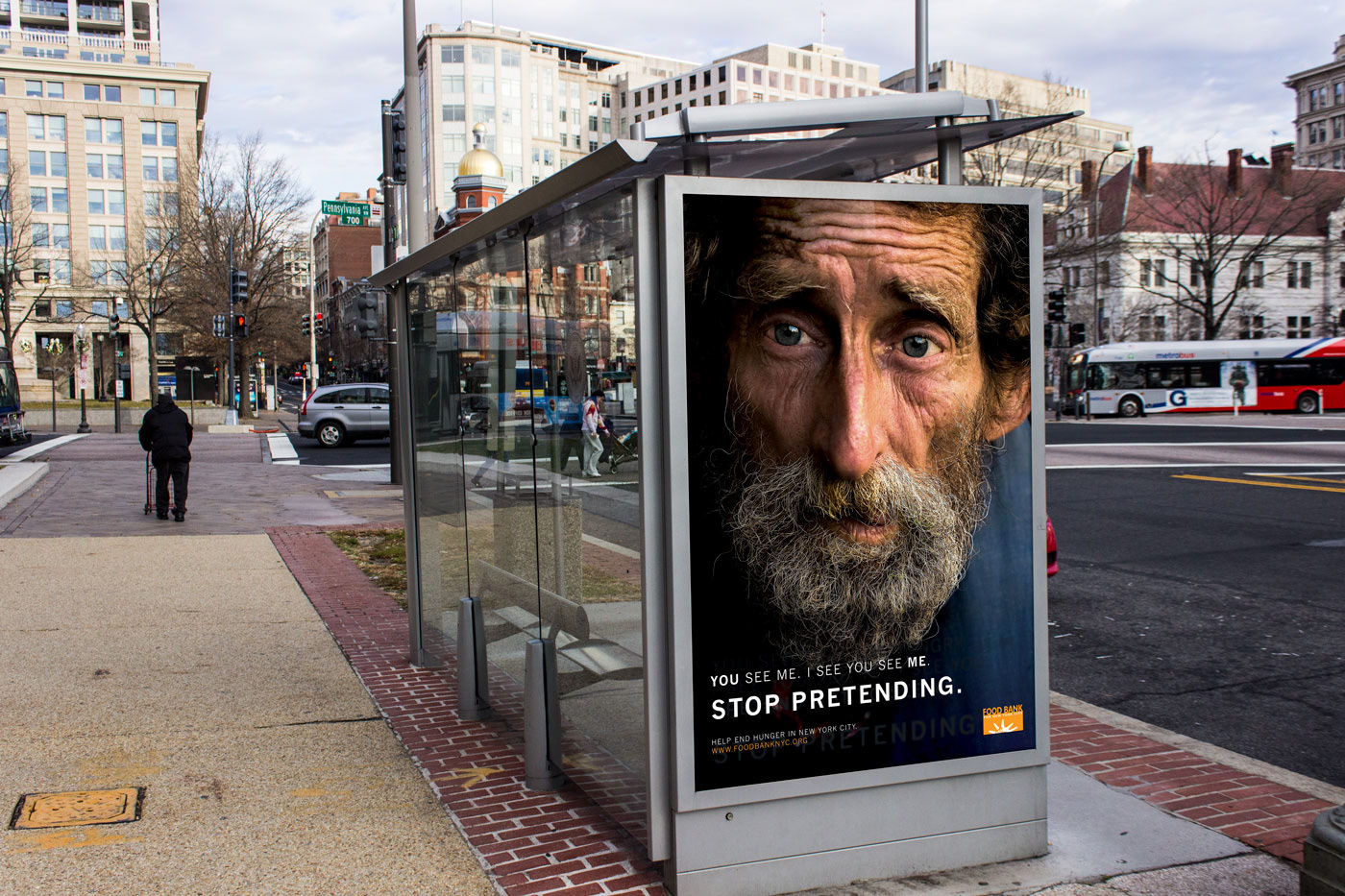
The advertising concept pairs direct eye contact with a confrontational headline. The copy asks viewers to notice a person rather than look past them, while a simple call to action links that moment to hunger relief.
Design for the encounter.
The portrait carries the initial attention; the headline sharpens the invitation to respond. A placement mockup explores how the composition could work in a public setting.
Build a sound that can travel.
A familiar melodic reference is reduced to a short phrase, then adjusted in notes and instrumentation to suggest urgency. The proposal considers how that identity could scale across devices and listening contexts.
The melodic reference.
The opening phrase establishes a recognizable musical starting point.
A shorter phrase.
The melody is reduced to the notes associated with “can you see.”
The proposed identity.
Adjusted notes and instrumentation give the short identity a more urgent character.
Extend the idea consistently.
The supporting guidelines define when to add the spoken organization name, how music and ambience can support the narrative, and how an opening problem can move toward a positive invitation. These are proposed communication choices; audience response was not measured.