Make room for depth in a demanding workday.
The program introduced design thinking in the context of people leadership and managerial responsibilities. Our audience consisted primarily of upper-management employees balancing professional development with substantial day-to-day demands.
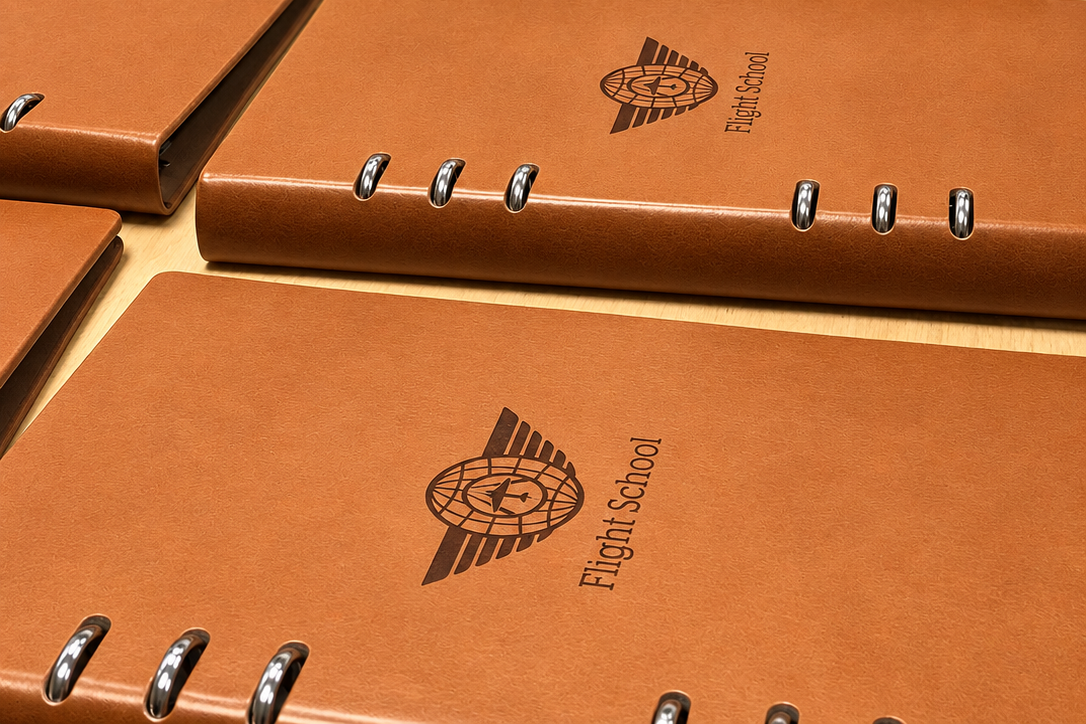
Our team needed to balance educational rigor, depth, and time. We chose a blended structure: LMS-based material between monthly in-person seminars, supported by peer projects and a meaningful physical artifact—the leather-bound Flight Log.
My contribution within the team.
I consulted on the pedagogical approach and contributed to learning outcomes, objectives, flow, and scaffolding, with attention to feasibility. I also copyedited learning materials, laid out the print resources in Adobe InDesign, and produced presentation templates and refinements for live delivery.
Graphics and visual elements were developed collaboratively with Don Larson. I also collected and edited supporting assets, including photographs used in the layouts. My production responsibilities included preparing the personalized learning kits.
Carry the learning into the next session.
- Prepare
Engage with LMS material and readings between seminars.
- Explore together
Use the monthly session for discussion, notes, and work with peers.
- Reflect & plan
Use the journal to consider ideas and plan project next steps.
- Return ready
Bring that thinking into the next session and the ongoing project.
A journal with a continuing purpose.
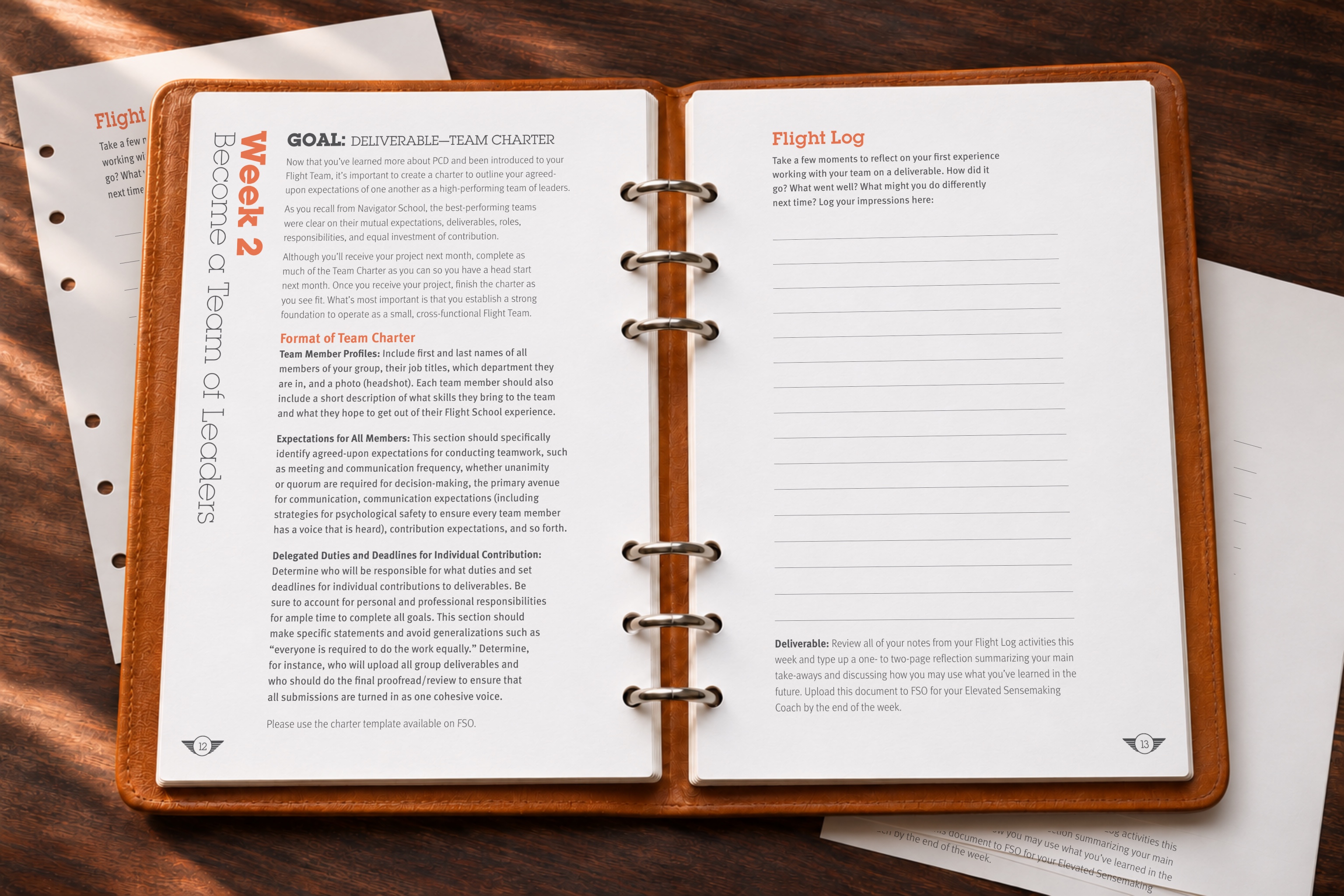
The journal grew from the need for introspection and planning. We intended it to become a working companion: a place to take in-session notes, reflect on the material, and plan the next steps of a peer project.
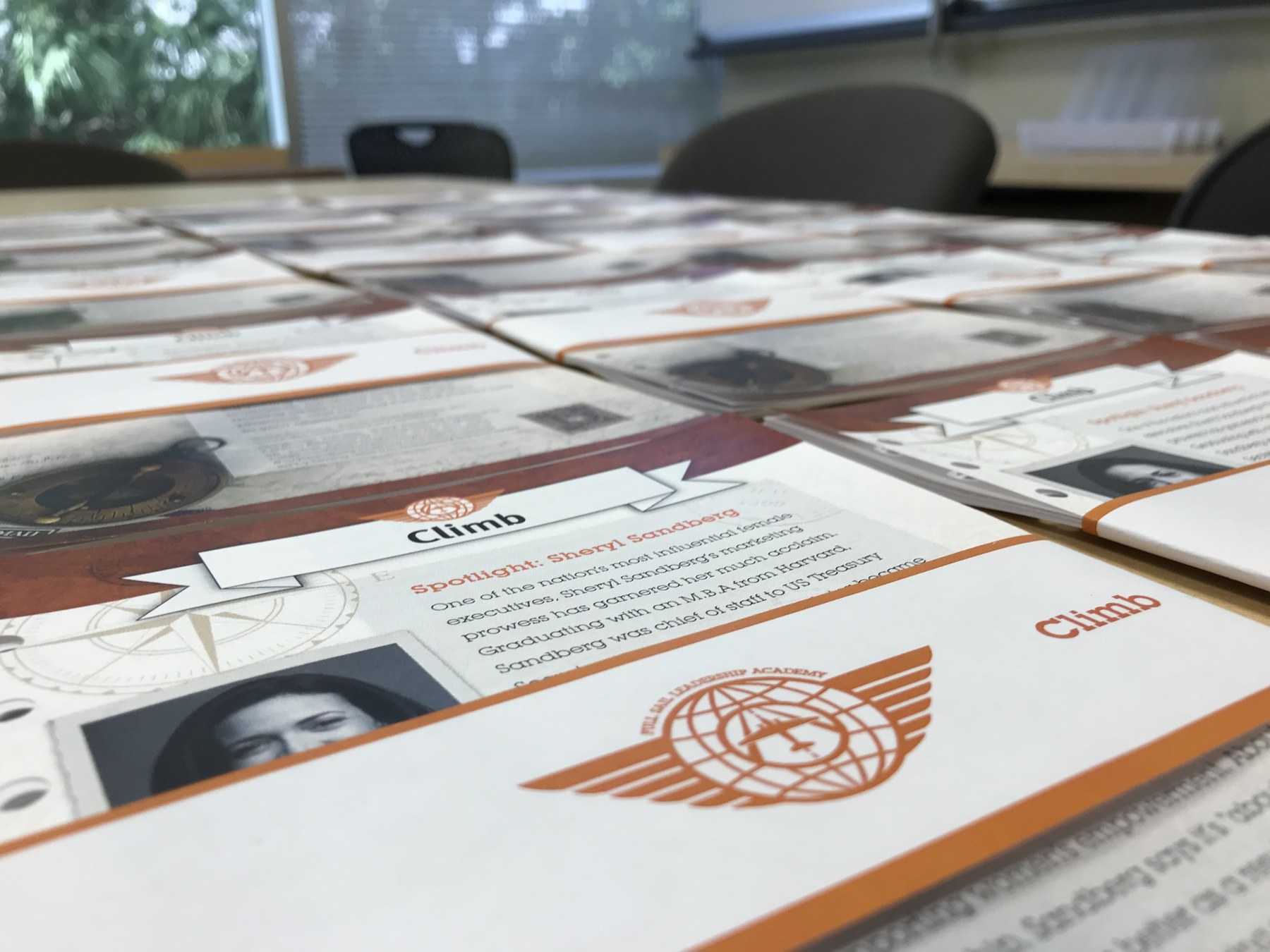
That role shaped how the print material was organized. Readings sat alongside reflection prompts and space for writing, connecting the content with the learner’s own thinking. The journal was designed to help participants arrive at the next session prepared to engage with both the ideas and their peers.
A consistent language across formats.
We invested considerable effort in the design language for the LMS and print materials: body copy, heading styles, hierarchy, and the use and placement of visual elements. Readability and clear delivery of essential information guided those decisions alongside aesthetics.
We carried that attention into the print layouts, graphics, and presentation work. The aim was to help learners recognize the structure of the material as they moved between independent learning and live sessions.
Give presenters a shared starting point.
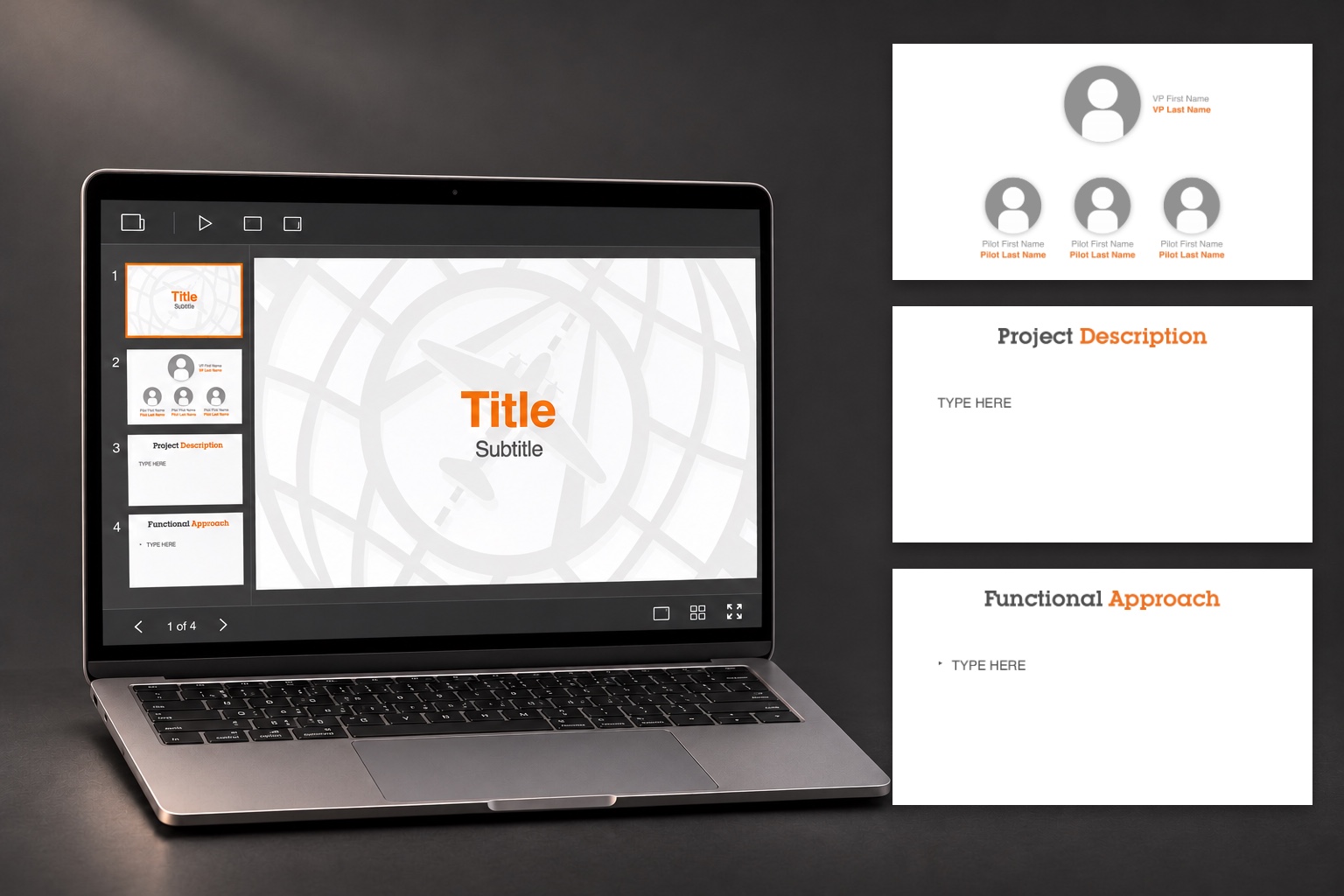
I produced a series of presentation templates and refined completed decks before live delivery. The templates brought the program’s visual language into the seminar setting and provided a consistent foundation for presenting the educational content.
Follow the work through to delivery.
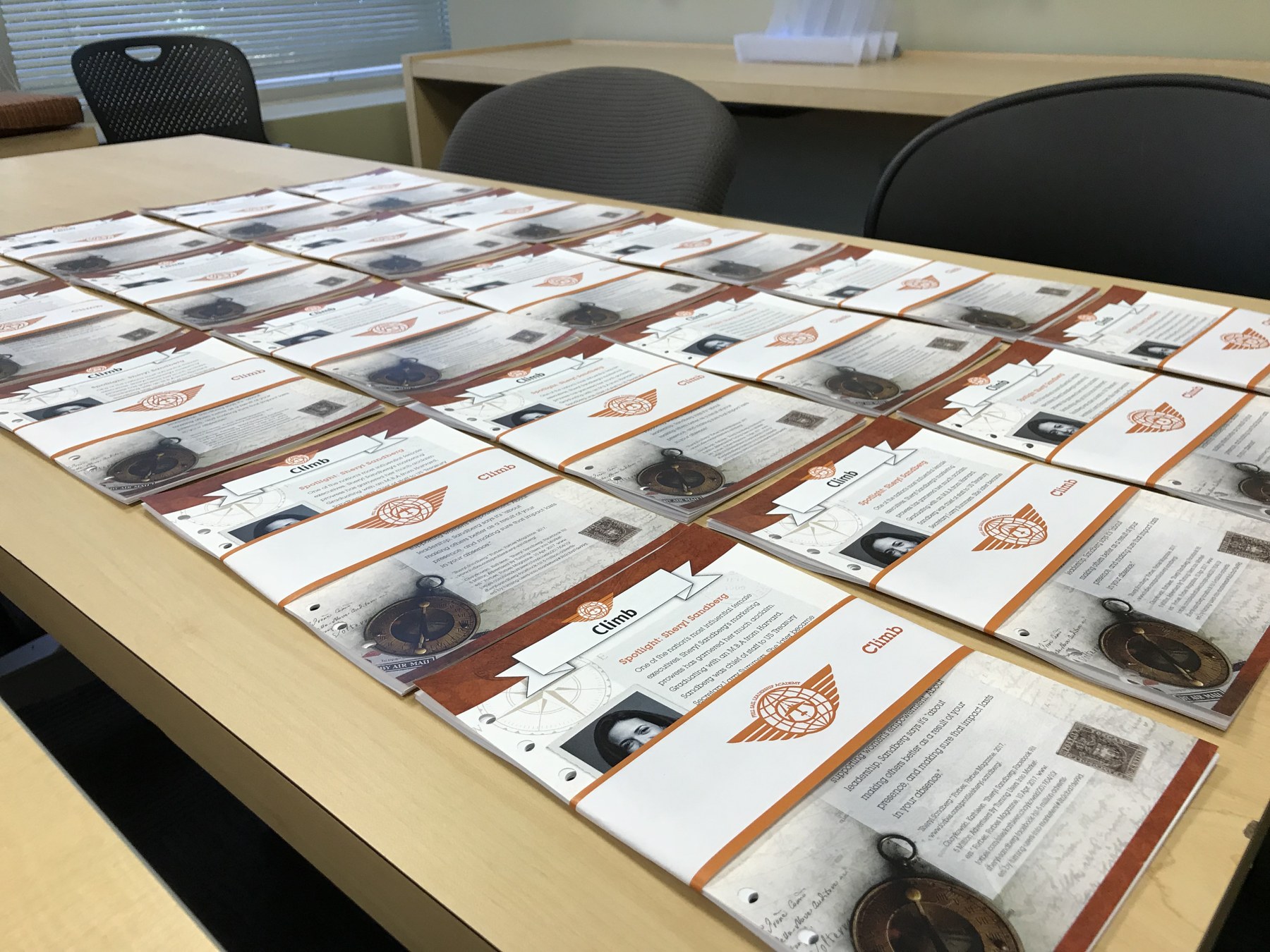
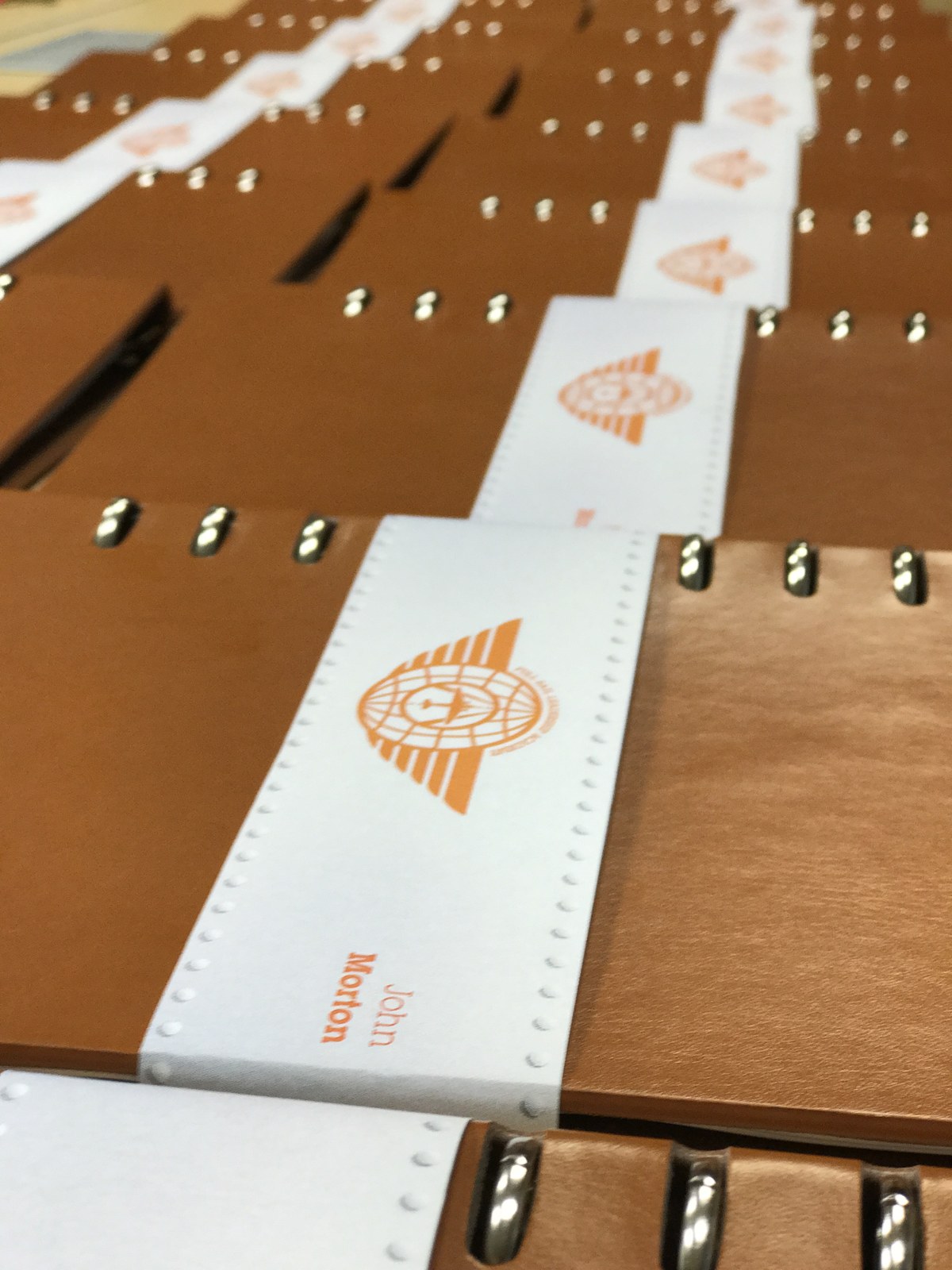
We commissioned laser engraving for the leather binders. I then printed, trimmed, punched, and assembled the instructional materials. Each binder was wrapped in a paper band bearing its recipient’s name for distribution at the live sessions.
The finished object gave the program a physical presence. The binder held the material participants would read, annotate, and return to as their work progressed.
Learning in the seminar setting.
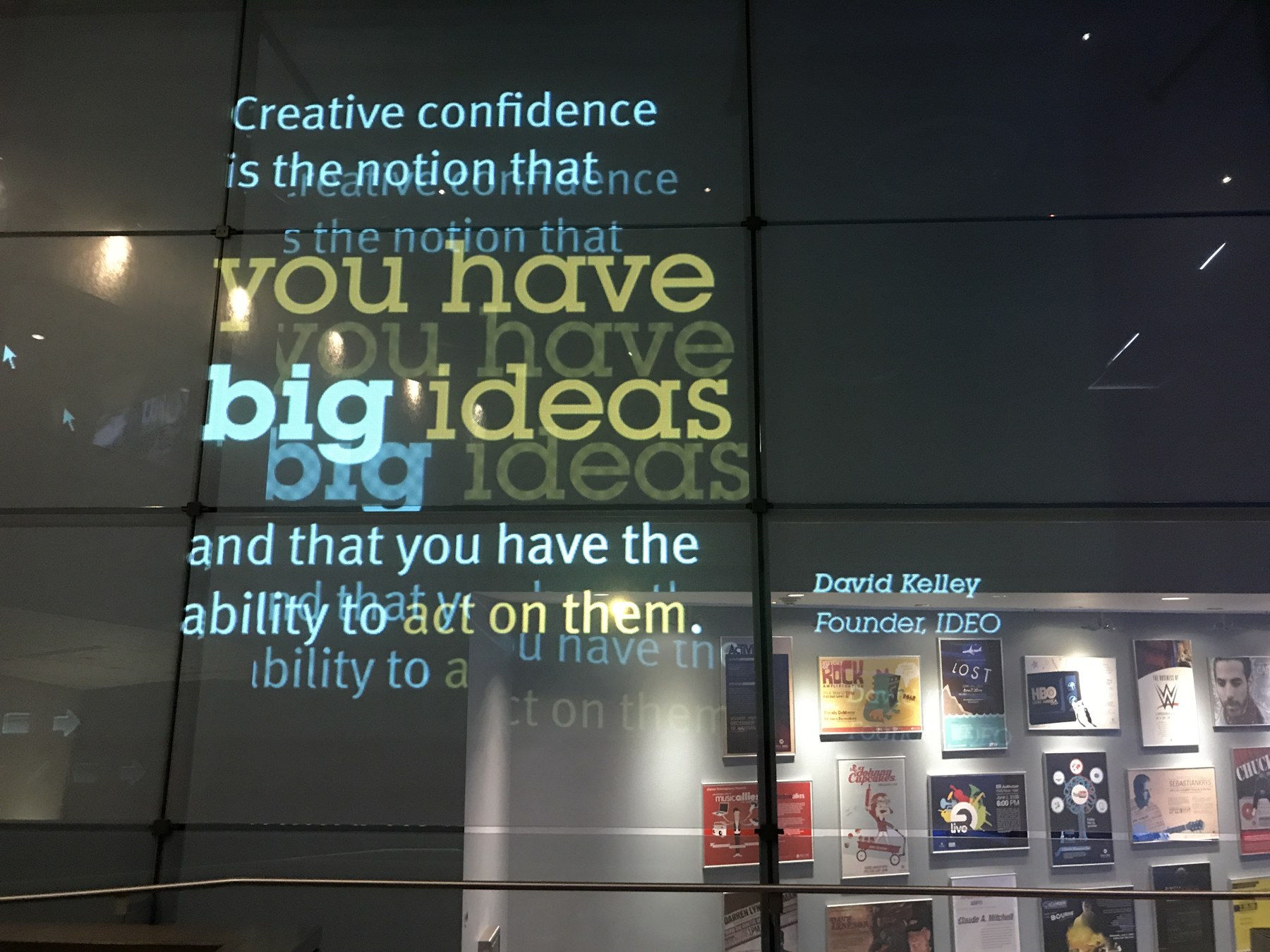
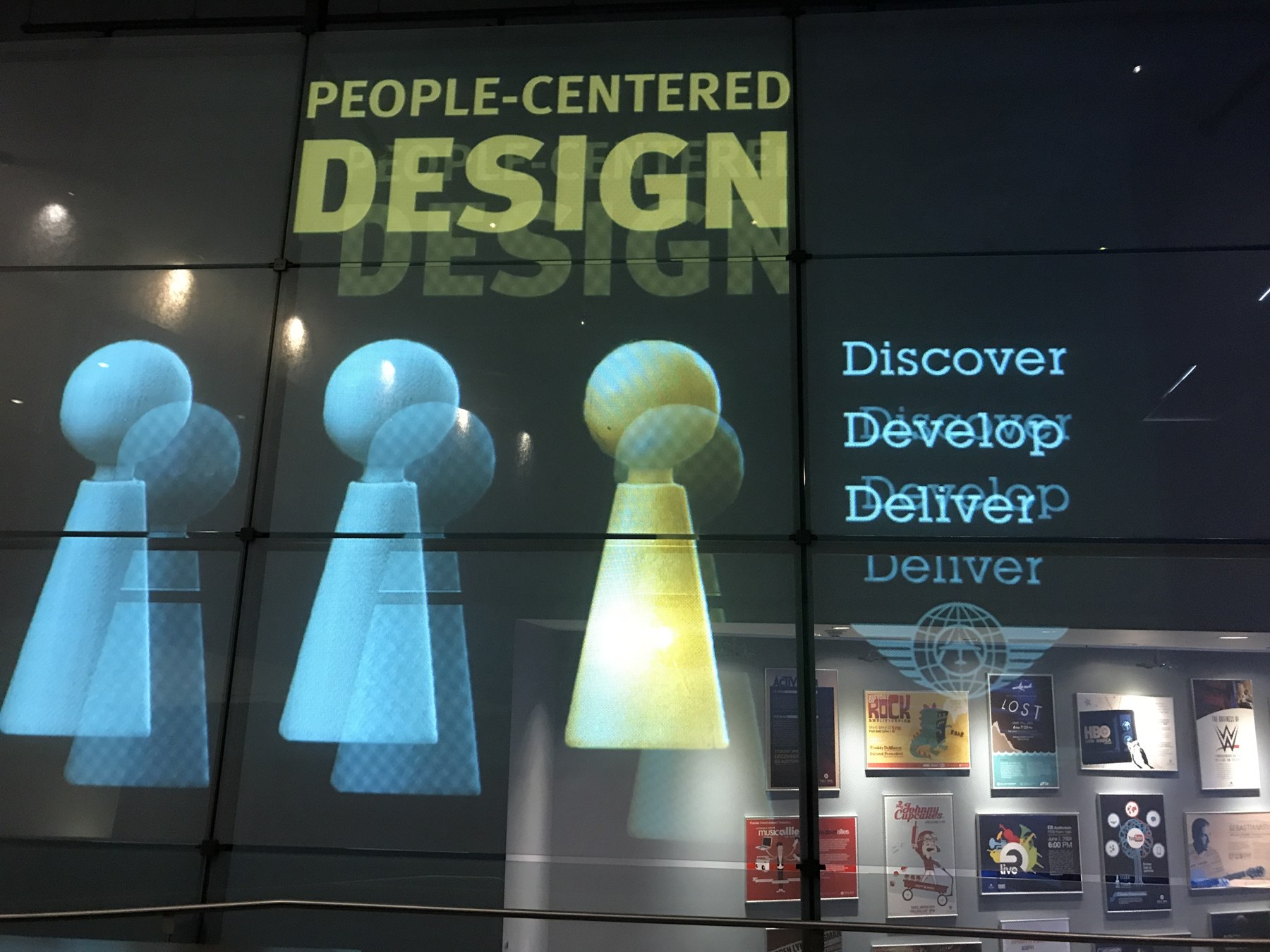
The session environment extended the program’s themes beyond the printed page. These photographs show projected displays outside a live session, bringing creative confidence and people-centered design into the setting.
The materials became part of the sessions.
During the program, I observed participants returning with annotated journals and using them during discussions. This was a concrete sign that the journal was serving its intended role as a resource carried between sessions.
The presentation materials were accepted as effective upon delivery.
Instructional decisions continue into production.
Flight School connected my work as an educator and a visual designer. Considering workload, sequencing the material, clarifying instructions, and preparing the printed resources were connected parts of making the experience usable for its audience.
Credits: Program developed by a seven-person Full Sail University team. Graphics and visual elements: Ryan McClung and Don Larson. My role included instructional consultation, copyediting, InDesign layout, presentation templates and deck refinement, asset preparation, and print production. Photographs used within the learning materials came from supporting sources. The binder and presentation views are AI-generated portfolio mockups based on original page and slide designs; artifact photographs document the original production.